No, this is not a story about the eternal fountain of youth, but it might be about how long do you want to be old?
This is about a story that struck a real chord with me.
It was the story of a man with a far-from-ordinary view of how long he wanted to live. His position didn’t come from a place of illness. He was perfectly well, and that was partly what made it so confronting.
Dr Ezekiel Emanuel, an oncologist, bioethicist and former health policy adviser to President Barack Obama, had written an essay for The Atlantic titled Why I Hope to Die at 75.
The title was intentionally provocative. It worked. Thousands of people responded to the article, many of them deeply troubled by what he had written.
Emanuel was 57 at the time, which gave him another 18 years before reaching his chosen age. But his essay wasn’t really an announcement of when he intended to die. It was written to provoke a larger conversation about how we live, how we age and what we ask medicine to do for us towards the end of our lives.
How do you want to age?
Emanuel wasn’t proposing suicide or euthanasia. Nor was he saying that everyone should die at 75.
What he intended to change at 75 was his approach to healthcare. He would stop routine screening and most preventive interventions intended to extend his life. If he developed a serious illness, he would favour comfort and palliative care over treatment aimed primarily at keeping him alive for longer.
You may believe, as I do, that life after 75 can be good.
We may finally be free from some of the striving that consumed our younger years: establishing ourselves, making money and constantly worrying about the future. The future has arrived, and perhaps there is finally time to enjoy it.
Emanuel acknowledged that death is a loss. It deprives us of experiences, milestones and time with our spouses, families and friends.
But he also argued that living too long can represent another kind of loss. Physical and cognitive decline can restrict our lives and change how others experience and remember us. Rather than being remembered as vibrant and engaged, he feared becoming defined by frailty and dependence.
It’s a sad and sobering description of later life. But does it have to be this way?
Being left out in the cold is a lonely place
My mother began showing signs of dementia in her early seventies. The disease eventually took her life at the age of 77.
During the years I cared for her, I became exceedingly frustrated with the medical profession. Once she received the diagnosis, it felt as though we had been ushered into a wilderness no one could help us navigate.
The doctors knew what was coming, and they knew only too well that they couldn’t stop it.
They prescribed the medications available at the time. These gave us some sense of hope, even though they could offer little more than a possible slowing of the inevitable. Beyond that, there seemed to be very little follow-up or meaningful support.
We left with pamphlets, website addresses and the knowledge that our lives had changed irrevocably.
It was a confusing and desperately lonely place to inhabit.
That experience led me to think more seriously about how I wanted to live, not only in the here and now, but in a way that might improve my chances of remaining well as I grew older.
Could I contribute to my own healthy longevity? Could I reduce the possibility of becoming dependent on others? Was that even within my control?
We can make choices that improve our chances of remaining healthy, mobile and engaged, but we cannot guarantee the outcome. Genetics, illness, circumstance and plain luck all have their say.
That may be one of the most difficult truths about ageing: we have some influence, but never complete control.
What are we trying to prevent?
Many illnesses can disrupt our hope of ageing well. Although Emanuel’s essay wasn’t solely about dementia or Alzheimer’s disease, he used the prevalence of dementia among older Americans to support his argument.
Those statistics rocked me to my core.
If a cure remained a long way off, I felt governments and researchers should be investing far more in prevention and in understanding the conditions that make healthy ageing possible.
I wanted to be able to visit a doctor while I was still well and have a meaningful conversation about preserving my health, rather than waiting until something had already gone wrong.
Medical practice must be guided by evidence, of course. Doctors cannot responsibly recommend interventions simply because we hope they might work. But that makes independent research into prevention, lifestyle and healthy ageing even more important.
Emanuel made a related argument about research funding. He believed we should invest more in Alzheimer’s disease, chronic illness and the disabilities associated with ageing, rather than concentrating so many resources on prolonging the final stages of dying.
On that point, I found it difficult to disagree with him.
What about the outliers among us?
Where Emanuel lost me was in his bleak assessment of what most people could contribute after 75.
He wrote:
“The fact is, by 75, creativity, originality, and productivity are pretty much gone for the vast, vast majority of us.”
While he acknowledged that there were outliers, he didn’t give the rest of us much hope.
But many people live large parts of their younger lives without being particularly creative, original or productive. I’m not convinced that the capacity to contribute suddenly abandons us at 75.
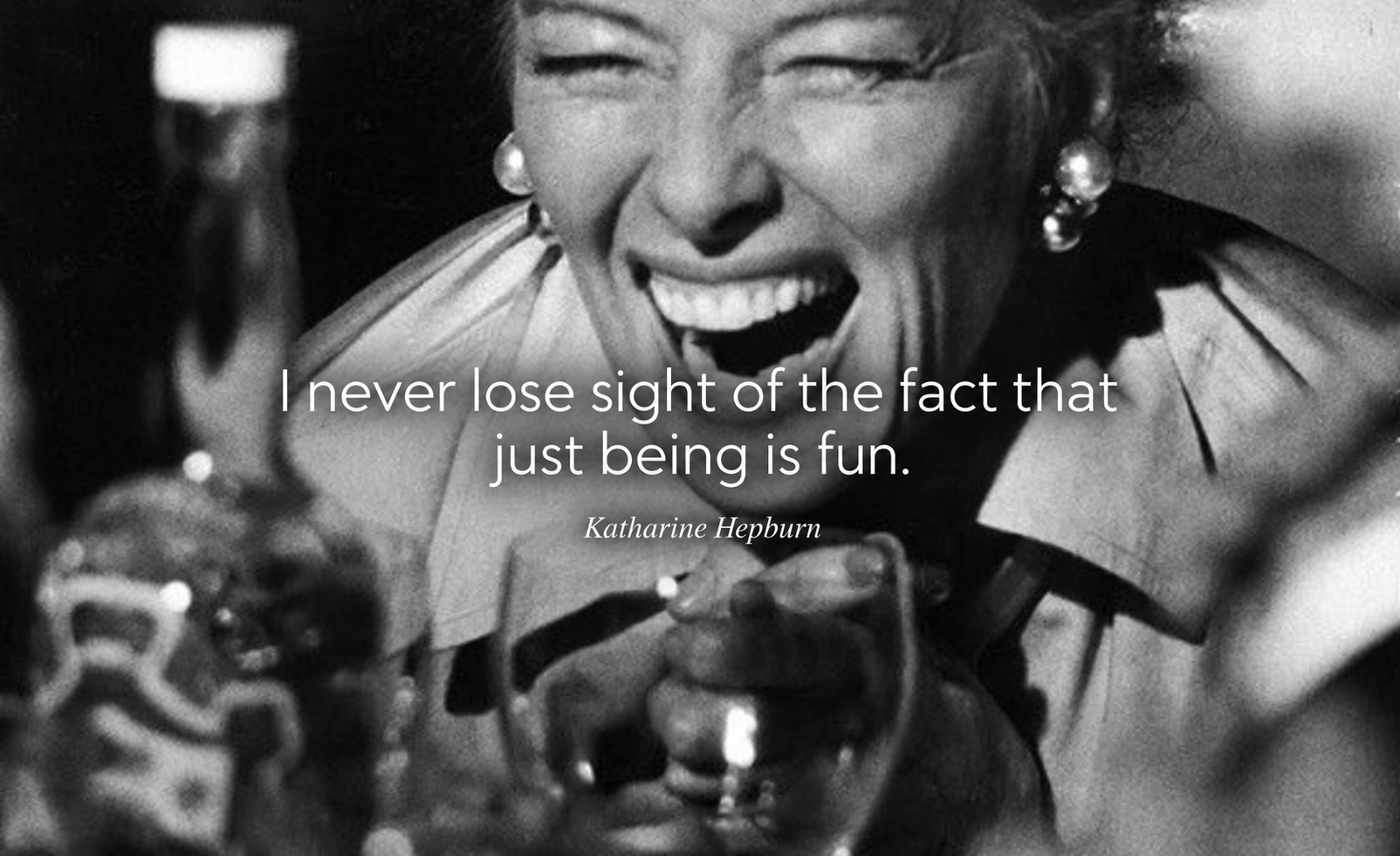
I could also think of women living very public and engaged lives well into their seventies and beyond: Jane Fonda, Helen Mirren and Judi Dench among them. Katharine Hepburn, now gone, continued working into her eighties.
Perhaps they weren’t representative of everyone. But didn’t they offer some inspiration about what later life might contain?
And must creativity or productivity determine the value of a life anyway?
A person may no longer produce work or contribute in ways society can easily measure, yet still be deeply loved, connected and important to the people around them. There is a danger in making usefulness the price of our continued existence.
Does Dr Emanuel have a point?
I wasn’t entirely against what Emanuel had written. Far from it.
I believed many of us could live enriched, happy and creative lives well beyond 75. I also believed that when someone’s quality of life had become unbearable, there could come a time when preventive or corrective treatment should cease.
Palliative care could take the place of curative care. Comfort and dignity could matter more than extending life solely to postpone the grief of those who would be left behind.
That didn’t make Emanuel opposed to life. In fact, he appeared to embrace it fully.
His goal was to make us think existentially about the lives we were living at that moment and about our eventual departure from the world. Perhaps contemplating death was one way of getting more living out of life.
Twelve years later, I’ve returned to this article.
I was curious. How does Emanuel feel now?
Emanuel is now much closer to 75, and he hasn’t substantially changed his mind.
He has clarified and slightly amended his position. He now says he would continue having COVID vaccinations after 75 because they can reduce the risk of serious illness and hospitalisation. But he still intends to stop pursuing medical interventions whose principal purpose is to prolong his life.
What has changed, or perhaps simply become clearer, is the emphasis he places on living well before that point.
In Eat Your Ice Cream, he argues against an obsessive approach to longevity. Eat reasonably well. Move your body. Maintain your strength. Keep learning. Protect your relationships. Don’t spend so much time trying to manufacture a longer future that you forget to enjoy the life you’re living now.
He encourages people to remain curious and take on new challenges as they age. That sounds considerably more hopeful than his original declaration that creativity and productivity have largely disappeared by 75.
As I return to this essay, three remarkable women have died within the space of a few weeks. Dolly Parton was 80, Gloria Steinem 92 and Yayoi Kusama 97. Parton remained a creative force and philanthropist throughout her later life. Steinem continued writing and advocating for women, with her final memoir awaiting publication when she died. Kusama continued painting until her final days.
They were exceptional women, certainly. But perhaps “outlier” is too convenient a word for an older person who continues to create, contribute and remain interested in the world. It makes a full later life sound like a statistical anomaly rather than something we might reasonably hope for.
Perhaps our views were closer than I understood in 2014.
Neither of us was arguing that life should end the moment it becomes difficult, nor that illness or disability makes a life worthless. We were both questioning the assumption that living longer must always be the overriding objective.
I still don’t accept 75 as the point at which our creativity, contribution or capacity for pleasure inevitably disappears. Far from it! Age alone tells us very little about the life still being lived.
But I understand more clearly now what Emanuel was asking.
Not simply: how long do you want to live?
But: what makes you feel alive, and how much of your actual life are you willing to sacrifice in the hope of extending it?
At 57, that can feel like an interesting philosophical question.
Closer to 75, it begins to feel rather more personal.
You can read Dr Ezekiel Emanuel’s original essay, Why I Hope to Die at 75, at The Atlantic.
His latest book is Eat Your Ice Cream: Six Simple Rules for a Long and Healthy Life.
See you next time,
