
The no so quiet achiever in your bathroom cabinet.
This article has been substantially reviewed and updated in 2026 to reflect current research and what we now know about using niacinamide.
When I first wrote about niacinamide, it was hardly the ingredient on everyone’s lips. Vitamin C had sparkle. Retinol had status. Niacinamide quietly got on with supporting the skin barrier, calming the appearance of redness and helping with uneven tone.
Now it’s everywhere. You can find it in serums, moisturisers, cleansers, sunscreens and products promising percentages that seem to rise with every launch.
That popularity is mostly deserved. Niacinamide isn’t a miracle ingredient, because there are no miracle ingredients. But it is one of the more useful and versatile ingredients we have. It also comes with a reassuring body of research behind it.
So, what does niacinamide genuinely do for the skin, how much do you need, and does a higher percentage necessarily make it better?
What is niacinamide?
Niacinamide, also known as nicotinamide, is a form of vitamin B3. It isn’t quite the same thing as niacin, although both belong to the vitamin B3 family and can be converted into biologically active coenzymes in the body.
Vitamin B3 is essential to normal cellular function. In skincare, however, we’re interested in what niacinamide can do when it is applied topically. Its value lies less in one dramatic action than in the number of useful jobs it can perform.
Here are eight good reasons it has earned a place in so many skincare formulations.
1. Niacinamide supports the skin barrier
Your skin barrier helps hold water in and keep irritants out. When it isn’t functioning well, skin may feel dry, tight, reactive or generally uncomfortable.
Research has shown that topical niacinamide can support the production of ceramides and other lipids in the stratum corneum. These lipids are important components of a healthy barrier. This can help reduce transepidermal water loss and improve the skin’s ability to retain moisture.
This barrier support is one of niacinamide’s most convincing benefits, and one reason it can be useful across many skin types.
2. It can improve hydration
Niacinamide isn’t a humectant in the same way as hyaluronic acid or glycerin. Its hydration benefit is more indirect: by helping the barrier work more effectively, it helps the skin hold on to the water it already has.
That distinction matters. A hydrating serum can add water-binding ingredients, while good barrier support helps prevent that moisture from escaping quite so readily. Many well-formulated products do both.
3. It can calm the appearance of redness and blotchiness
Niacinamide has anti-inflammatory properties and may help visibly calm skin that is prone to redness. Improving the barrier can also make skin less vulnerable to everyday irritants.
It isn’t a treatment for every cause of facial redness, and persistent redness should be properly assessed. But in a gentle formula, niacinamide can be a useful supporting ingredient for skin that feels reactive or easily unsettled.
4. It may help manage excess oil
Niacinamide is often recommended for oily and blemish-prone skin, and there is some clinical evidence that topical niacinamide can reduce facial sebum output.
What it doesn’t do is “dry out” the skin. This makes it a more sensible option than aggressive cleansing or astringent products that leave the face feeling squeaky clean but may disrupt the barrier in the process.
Niacinamide isn’t an acne cure, although its anti-inflammatory and oil-balancing actions can make it a useful part of a broader routine.
5. It can help improve uneven pigmentation
Niacinamide doesn’t stop the skin from producing melanin. Instead, research suggests that it can interfere with the transfer of melanosomes, the pigment-containing packages passed from melanocytes to surrounding keratinocytes.
In practical terms, consistent topical use may help reduce the appearance of uneven pigmentation and existing dark spots over time.
It should sit alongside, not replace, daily broad-spectrum sunscreen. Pigmentation is complex, and melasma or persistent patches often require a more considered treatment plan.
6. It can soften the appearance of fine lines
In a 12-week clinical study, a moisturiser containing 5% niacinamide improved the appearance of fine lines and wrinkles, elasticity, red blotchiness, hyperpigmented spots and sallowness compared with the control formulation.
That doesn’t mean niacinamide rebuilds the face or erases wrinkles. It means regular use can make a modest but worthwhile contribution to smoother, better-functioning skin.
7. It can improve dullness and sallowness
Skin doesn’t need to “glow” to be healthy, despite what the beauty industry would have us believe. Still, many people notice that their complexion becomes duller or more uneven with age and accumulated sun exposure.
By supporting barrier function and helping improve uneven tone, blotchiness and sallowness, niacinamide can give the skin a clearer and more even appearance. Think gradual improvement rather than overnight radiance.
8. It generally works well with other skincare ingredients
Niacinamide is unusually easy to accommodate in a routine. It can generally be used with vitamin C, retinoids, peptides and exfoliating acids. The old claim that niacinamide and vitamin C cancel each other out arose from conditions that don’t reflect the way modern skincare is formulated and used.
That doesn’t mean every product will suit every skin. Irritation can come from a high concentration, the overall formulation, another active in the product or simply using too many serums at once. But niacinamide itself is usually well tolerated at the concentrations most often studied.
How much niacinamide is enough?
In my experience, around 10% niacinamide is a good concentration to look for in a dedicated vitamin B serum, although it isn’t a deal-breaker. If niacinamide appears high on the ingredient list in a well-formulated leave-on product, there may be enough to provide a worthwhile benefit.
The research doesn’t establish one ideal percentage for every skin or every purpose. Clinical studies have demonstrated benefits at concentrations as low as 2%, while 5% has been used in some of the best-known research into uneven tone and visible signs of ageing. Higher-strength formulas containing 10% or more are now common, but we don’t yet have good comparative evidence showing that the benefits increase neatly with the percentage.
Concentration is only part of the story. The quality of the formulation, how well the ingredient is delivered, what else the product contains and how your skin responds all matter. A higher number on the bottle doesn’t tell you, on its own, whether it is the better product.
When should you apply niacinamide?
Niacinamide can be used in the morning, evening or both. I favour using it once a day and keeping the routine manageable.
Apply a niacinamide serum after cleansing and before moisturiser. In the morning, finish with broad-spectrum sunscreen. If your moisturiser already contains niacinamide, that can be your niacinamide step.
There is no special prize for layering several products containing the same active. More products don’t necessarily produce a better result.
Credit where it’s due
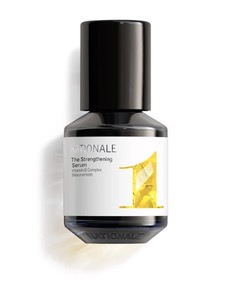
I have RATIONALE to thank for introducing me to the benefits of topical vitamin B3. Its original vitamin B serum was my first experience of niacinamide as a serious skincare ingredient, long before it became the mainstay that it is has become.
What should you look for in a niacinamide product?
Niacinamide is now found in products at almost every price point, so there’s little value in my giving you a fixed list that may soon be out of date. What’s more useful is knowing how to assess a formula for yourself.
Many of niacinamide’s established benefits have been demonstrated at concentrations between 2% and 5%. Higher-strength formulas are widely available, but a bigger percentage doesn’t automatically make a product more effective and may be less comfortable for sensitive or reactive skin.
Look at the formulation as a whole, consider what else it contains and choose a texture that works comfortably within your routine. Armed with that information, you’re perfectly capable of conducting your own search.
Is niacinamide still worth using now that it is everywhere?
Yes. The skincare boom for niacinamdie hasn’t made it less useful. It has simply made it easier for marketing to outrun the evidence.
Niacinamide can support the barrier, improve moisture retention, help calm visible redness, reduce excess oil and gradually improve uneven tone and some visible signs of ageing. Those are substantial benefits from one generally well-tolerated ingredient.
But it doesn’t need to be in every product you own, and it doesn’t need to arrive at 20% strength to prove it’s working for you.
No longer the quiet achiever it once was, most skincare brands will have some form of niacinamide in their skincare rang. What does that tells us? Yep, it’s not just popular because of marketing hype, it actually delivers on it’s promise.
Frequently asked questions about niacinamide
Is niacinamide the same as niacin?
No. Niacinamide and niacin are related forms of vitamin B3, but they aren’t identical. Niacinamide is the form most commonly used in topical skincare and doesn’t usually cause the flushing associated with niacin.
Can I use niacinamide with vitamin C?
Yes. Modern niacinamide and vitamin C products can generally be used in the same routine. If layering several active products irritates your skin, use them at different times rather than assuming the ingredients are chemically incompatible.
Can I use niacinamide with retinol?
Yes. Niacinamide’s barrier-supporting properties can make it a useful companion to a retinoid. Introduce new actives carefully so that you can identify the cause if irritation develops.
Can niacinamide cause irritation?
Any skincare product can cause irritation, and niacinamide will not suit everyone. However, it doesn’t cause the same expected adjustment response associated with retinoids. If a niacinamide product stings or causes persistent redness, stop using it and consider the complete formulation rather than assuming the percentage alone is responsible.
Is 10% niacinamide better than 5%?
Not necessarily. Benefits have been demonstrated at concentrations between 2% and 5%, while many people use 10% or higher successfully. We don’t yet have good comparative evidence showing that a higher percentage consistently produces a better result.
How long does niacinamide take to work?
Hydration and comfort may improve relatively quickly, but changes in uneven tone, fine lines or oiliness generally require consistent use over several weeks. Clinical studies have reported visible changes from around four weeks, with some assessing results over eight to twelve weeks.
Do I need a separate niacinamide serum?
Not if you already use a well-formulated moisturiser or another leave-on product containing it. A separate serum is useful only if it fills a genuine gap in your routine.
And now you?
Did you find this article informative? Why not share it with your friends?
Got a question you’d like answered? You can shoot me an email over here. I read every email and usually reply within 24 hours.
See you next time,

Sources and further reading
Hakozaki et al., British Journal of Dermatology (2002): niacinamide and facial hyperpigmentation
Bissett et al., Dermatologic Surgery (2005): 5% niacinamide and visible signs of ageing
Draelos et al., Journal of Cosmetic and Laser Therapy (2006): 2% niacinamide and facial sebum
Cosmetic Ingredient Review safety assessment of niacinamide and niacin