
It was the bad hair day I didn’t see coming.
At first, I didn’t notice. It crept up subtly. Once I did, I’d already lost a significant amount of hair, and that’s when the panic set in.
I booked an appointment with my GP post haste.
This can’t be happening, I thought.
During the years of peri-menopause and then finally menopause, I ran the gamut of symptoms: hot flushes, night sweats, mood swings and anxiety, insomnia and on it goes.
They say there are at least 34 symptoms connected to menopause. Yes, someone’s come up with a number. It seems a lot, but there you have it. Welcome to menopause.
Luckily, if you want to call it luck, I didn’t get all 34. I only made it to 24. Yep, 24 symptoms over several years.
They seemed to come a couple at a time; perhaps this is the body’s way of helping us cope. An avalanche of 34 menopausal symptoms would be debilitating. Sometimes, even with the drip feed of troubling symptoms, it was hard to carry on, business as usual. But I did.
By the time the frightening prospect of hair loss appeared, many of my other symptoms had begun to subside, and I thought the worst was behind me.
Sadly, I was wrong.
It may sound silly, but I initially felt shame and embarrassment about discussing this with my doctor. Why? I can’t explain it. Perhaps it was fear. If you think that way, too? Don’t. Go and see your doctor.
So what was going on, and what did my doctor say about my problem and hair loss in women?
Once I overcame my misguided shame, discussing my thinning hair with my doctor was a relief. Blood tests were ordered, and a trip to the dermatologist was recommended to ascertain the root cause of my hair loss (no pun intended).
Telogen Effluvium
Medically, rapid hair loss is known as Telogen effluvium and is different from other forms of hair loss, such as Alopecia Areata, an autoimmune disease characterised by sudden and random bald patches or Androgenic Alopecia, which is also known as male or female pattern baldness.
Telogen effluvium is a scalp disorder characterised by the thinning or shedding of hair resulting from the early entry of hair into the telogen phase (the resting phase of the hair follicle). In this phase, telogen hairs begin to shed at an increased rate, where normally, the approximate rate of hair loss (having no effect on one’s appearance) is 125 hairs per day. During telogen effluvium, it can be much higher. Source: Wikipedia
Genetics, thyroid dysfunction, anaemia, and autoimmune diseases, as well as the onset of an illness or virus, can contribute to hair loss. And, of course, it can be stress-related.
Or, perhaps it’s your reproductive hormones having some fun with you!! Except it’s not funny, it’s frightening.
But it could be something else. Hair loss in women can be confusing and complicated. Don’t guess at this or try to self-diagnose and muddle through; see your doctor post haste.
Enter the confusing world of hormone replacement therapy.
Even before the blood tests came back, the subject of hormone replacement therapy came up. Until now, I’d resisted hormone replacement.
Like many women, the controversy surrounding HRT was still on my mind, and I’d never found a doctor well-versed in menopause and hormone replacement therapy.
It’s weird, and I’m sure I’m not alone, but on a subconscious level, seeking pharmaceutical assistance for what is, after all, a natural occurrence seemed shameful and weak. I have rationalised that if my mother managed without any medical intervention, then why couldn’t I? Or maybe she just suffered in silence, as was the case with so many women’s issues for her generation.
Things are getting better, but at a glacial pace.
But my hair? C’mon, this was different. I was not going to lose my hair, and I would do whatever it took to stop it.
As well as HRT, my doctor also suggested I start using Regaine or Rogaine in the U.S.
Seriously, I gave her a sideways look because 1), that was for balding men, and 2), did that stuff even work?
Apparently? It does. Not only did my doctor suggest I start using it, but that I commence immediately, don’t wait to see the derm, get started. Today!
I left the medical practice, feeling mildly bemused that my doctor had recommended Regaine. But I also felt vulnerable, ashamed and embarrassed. And again, I ask myself why? Perhaps our hair is so deeply tied to our femininity that it brings all emotions to the surface.
But I pushed back on these unruly emotions and marched into my local pharmacy, and when I say marched in? What I really mean? I slunk in. Dark glasses firmly planted on my face, hoping not to be recognised while holding my soon-to-be-purchased box of minoxidil foam.
I may have felt embarrassed, but I’m so glad I pushed through my fears and unwarranted shame and took my doctor’s advice.
It worked. It took several weeks to notice a cessation of hair fall, but eventually, baby-fine hairs began to appear. Let me tell you, those baby hairs? Well, it felt like spring. I was renewed!!
The upside of hair loss? Yes, for me, there was one. Such an optimist, always finding the silver lining.
Now, a few years later, my hair is not what it used to be, and I don’t think it ever will be. But for me, that’s not such a terrible outcome. With slightly less hair, the natural wave I’ve been trying to tame all my life is no longer weighed down with all my hair (I had a lot of it) and can bounce into a gentle curl I love. As I said, silver linings.
What do I do now to boost hair regrowth?
1. Minoxidil Foam (Regaine)
I started applying Regaine every night.
How does it work?
First, if active ingredients that seem unnatural are not your thing, Regaine is probably not for you.
Personally, this is not something that worries me.
Minoxidil is the active ingredient in Regaine. Originally a medication for hypertension (high blood pressure), it was discovered to have an interesting side effect—hair regrowth.
To be clear, it will not work on every person experiencing hair loss, depending on the underlying cause and type of hair loss you’re experiencing.
If the area where hair once grew is caused by female pattern baldness, Regaine probably won’t be effective. However, women with generalised hair thinning are likely to see results.
If you want to learn more about minoxidil and hair loss in women, you might like to check out this article on Healthline or MrDr.com.au.
My final word? It worked for me. However, some say they experience unpleasant side effects like headaches. I had very few side effects, if any. But it is a drug, and following the manufacturer’s protocols for dosage and usage should be taken seriously.
2. Nutritional supplements.
I also decided to tackle my hair loss issues with a nutritional supplement.
A specific formula for hair, skin and nails containing Biotin (Vitamin B7), Zinc, Silica, Iron, Vitamin C and Milk Thistle may be useful.
Has it helped me? It’s hard to say, but when I was going through the initial stages of hair loss, taking a vitamin supplement went a long way in calming my anxiety.
So while I’m not one to dose up on every nutritional supplement, I believe some supplementation can be helpful in certain instances where there’s a risk of deficiency.
Always seek professional advice, and if it’s in the budget, then a supplement for your hair, skin and nails can’t hurt. But I don’t think it’s a deal-breaker; this is just my opinion.
3. A change in my hair care routine.

In my quest (not panicked at all), I also changed my shampoo and conditioner to a range to help with hair regrowth. It’s called Nioxin. A cleansing shampoo, a conditioner and a scalp treatment are packaged as a system.
Does it work? Yes, it seemed to help me, and Nioxin has a lot going for it, including all the B vitamins.
Thiamine (Vitamin B1)
Niacin (Vitamin B3)
Pantothenic acid (Vitamin B5)
Pyridoxine (Vitamin B6)
Biotin (Vitamin B7)
Folic acid (Vitamin B9)
Cyano-cobalamin (a synthetic form of Vitamin B12)
It also contains sunscreen agents, which seems a nice bonus because your hair and scalp need UV protection.
Nioxin also contains salicylic acid, which helps remove the buildup of dead skin cells and sebum, which is excellent for the overall health of your scalp.
For a full review of Nioxin, you may like to visit Lady Alopecia.
Or you can buy it over at Adore Beauty.
4. Hormone Replacement Therapy.
Hair loss was the trigger to seek help, but the truth is, struggling with menopause had become life-limiting.
Did it help with my hair loss? Most experts in the field of hormone replacement will say that of all the symptoms HRT can alleviate, hair loss is not one of them.
I have no anecdotal evidence that going on hormone replacement therapy helped, as I started on Regaine simultaneously. Still, I slept better, was less anxious, and other symptoms, like hot flushes, began to subside.
So, if calming anxiety and getting a better night’s sleep improves my overall well-being, you won’t get an argument from me.
Having a calm state of mind and a solid 8 hours of sleep is paramount to our health and hair!
Here’s the thing. I’m not a doctor. Nor am I promoting hormone replacement therapy, but what I am suggesting is, if you’re suffering from the symptoms of peri-menopause or menopause, then talk to your GP about it.
Or, find a GP who’s well-versed in all things hormone replacement. I’ve listed links to useful websites at the bottom of this article.
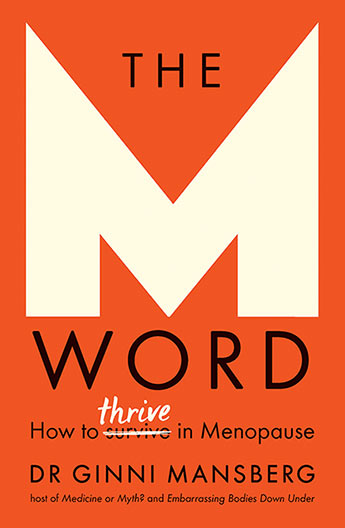
Or, if you’re looking for a good read on all the ins and outs of menopause. The M Word By Dr Ginni Mansberg
And then there’s vitamin D.
Vitamin D is a hormone activated by UV exposure. It’s an essential nutrient; whether you’re suffering from hair loss or not, it’s worth checking your levels as most of us don’t get enough of it.
Some symptoms of a vitamin D deficiency include getting sick more often than usual, fatigue and tiredness even after a good night’s sleep. And other worrying symptoms, like bone and back pain, depression, muscle pain, impaired wound healing, the loss of bone, which is compounded by menopause and yep, hair loss!
Vitamin D deficiencies are common, even in sunny Australia. Emerging evidence suggests that 60-70% of Australians have inadequate vitamin D levels.
Most of us are unaware of the importance of vitamin D, or, once identified, how easy it is to fix. But fix it, we should. I’ve also written more about vitamin D here.
Finally, getting the help you need.
So that’s what I did. I’m okay. I hope you are, too. My hair finally grew back, but hair loss in women is different for all of us, and this was my experience. Get the help you need from a medical doctor.
I no longer feel embarrassed to talk about my hair loss. Hair loss in women can happen at any age, and it’s not always caused by menopause. However, if you’re struggling to find a doctor well-versed in menopause, you may find the support you need by visiting one of these websites.
International Menopause Society
North America Menopause Society
You may also find this article: Are your hormones ruining your life?
And now you?
If you found this article useful, why not share it? Struggling with hair loss can be lonely, and you never know who amongst your circle of friends may need help.
Or, if you’ve got more questions about my experiences, you can email me here.
See you next time.
